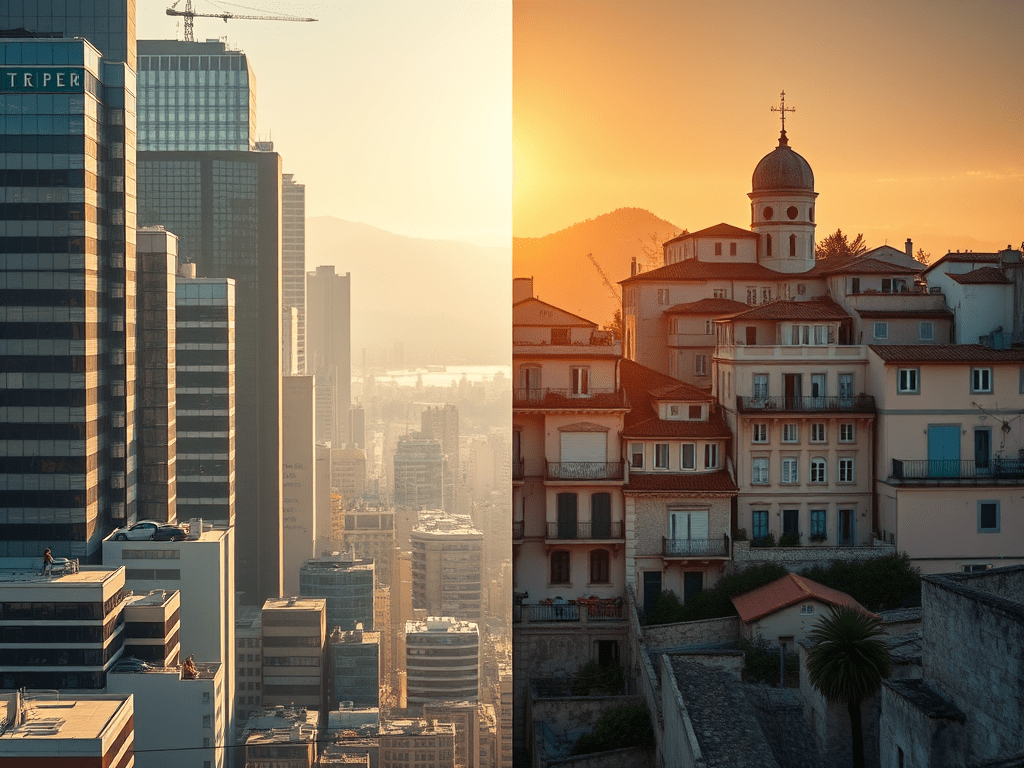
Everyone dreams of a fresh start somewhere beautiful – until the paperwork, politics, and promises start piling up. Relocating abroad isn’t just about sunshine and slower living; it’s about discovering how much “freedom” really costs when you trust another system with your future. Here’s what I’ve learned living between the U.S. and Portugal – the wins, the losses, and the lessons in between.
Challenge #1: Trusting Government Bureaucracy
Every country has its unique requirements for acceptance, and some are simpler than others. Yet, like many government agencies, consulates can be a special kind of challenge. You’ll encounter employees who seem to hate the job they chose, asking for redundant documents that require time, patience, and a small fortune in fees – all for your “freedom” to relocate.
But even after arrival, trusting another government to be honest and transparent isn’t easy. How do they expect the truth not to reveal itself once you’re living it? So many things are highly advertised that simply aren’t so. Promised incentives, privileges, or special conditions for foreigners quietly disappear mid-process – gutted or canceled entirely during the visa stage.
In Portugal, major decisions often seem to benefit a few and burden the majority – not unlike the U.S. The difference? Portugal tends to hold shady officials accountable, often demanding resignations. Americans, on the other hand, have a habit of re-electing failed leaders. So yes, Portugal may “screw everyone equally,” while the U.S. reserves special laws to harm minorities. On that front – Portugal wins.
Challenge #2: Business Reliability
If there’s one thing the U.S. tends to get right, it’s getting the job done – especially when money’s involved. American companies may not always value customer service the way they used to, but they do value completing the work and collecting payment. You can usually count on a business to show up, respond, and deliver a product close to what’s advertised – not necessarily the with a smile, but with a focus on finishing the job.
In Portugal, however, trust in business can be hit or miss. Hours of operation? Don’t count on the website. Pricing? Expect “flexibility,” especially if you’re new to the community. Communication can feel optional, via returned emails or returned calls. Add to the difference in cost of living – the U.S. dollar doesn’t stretch as far as many expect against the euro. What looks affordable online can feel very different once you’re paying in local prices day after day.
So, when it comes to consistency and the idea that you might want to do business again, shockingly, the U.S. takes the point.
Challenge #3: Real Estate Reality
Just five years ago was an amazing dream for many until the ripple effects of greed. Politicians, some wealthy families, and short-term rental giants like Airbnb dominated real estate, with bidding wars. The result? Real estate values skyrocketed, rising roughly 58% cumulatively.
Buying a home is one of life’s biggest investments – and one of the clearest contrasts between these two countries. In the U.S., real estate agents must pass rigorous exams, obtain certifications, and maintain active licenses to legally buy or sell homes as a business. There are rules, professional standards, and a paper trail of accountability. While discrimination and red tape still exist, the law generally protects buyers when wrongdoing occurs.
In Portugal, that professional standard doesn’t apply. Anyone can pose as a real estate agent – regardless of training, ethics, or even knowing “the back side of their own hand.” Realtors may hide property defects, push inflated prices, and collect their commission without accountability. Add on an upfront foreigner tax, and the investment can become a nightmare. Combine that with a legal system that moves when it feels like it, and it’s clear: the U.S. wins the real estate round.
Even more alarming is the standard home inspection process – which, unlike in the U.S., focuses only on the square meters and layout of the property, not whether anything actually works. Electrical issues, plumbing failures, heating malfunctions – none of it is guaranteed to be reviewed. And to make matters worse, sellers may try to charge extra for basic fixtures like cabinets, or even leave behind trash and debris, expecting you to foot the cleanup bill. For instance, the seller of this property stole the car charging port off the garage wall and left the wires exposed.
When you start doing the math, the picture gets even clearer. For example, on a home valued at 500,000 EUR, you’ll pay an IMT tax of 26,809.86 EUR and a Stamp Duty tax of 4,000 EUR, bringing your total taxes to 30,810 EUR – roughly 35,936 USD. This is due the day you receive your keys. Again, don’t forget that currency conversion! Adding the taxes to the purchase price, and your real cost jumps to 530,810 EUR, or about 620,000 USD – before renovation, furniture, or unexpected repairs.
Challenge #4: Food and Health
Now for something refreshing – the food. In the U.S., corporate food giants pump citizens with overpriced, chemically processed products designed more for profit than nourishment. The result? Millions sick and dependent on a for-profit medical system.
Portugal takes pride in real food. Farm-to-table isn’t a marketing slogan; it’s a way of life. Many additives and chemicals common in the U.S. are outright illegal. Food here expires – because it’s supposed to. If something is not in season, you won’t find it at the market. Bread molds, meat bleeds, produce tastes alive, including with seeds. And it’s affordable. There aren’t fast food restaurants 4-5 on the same block or in the same neighborhood. In Portugal, meals are meant to be savored and enjoying your company. On taste, health, and cost – Portugal wins by a mile.
Final Thoughts
Relocating abroad is no fairy tale. It’s a test of patience, adaptability, and trust – in systems, people, and your own resilience. Every country has its flaws, but understanding where each one shines (and where it stumbles) can make all the difference between frustration and fulfillment.
Over time, I’ve learned that loving a country and trusting it with your future are two very different things. Portugal has beauty, culture, and heart – but also deep flaws that test your patience and faith. For now, I reside in Portugal. For what I’ll call home there’s no certainty.
If freedom means navigating bureaucracy, cultural quirks, and new expectations – so be it. Just know what kind of freedom you’re truly signing up for.

What about you?
Have you relocated abroad or considered it? What’s been your biggest surprise or frustration living under a new system? Share your experience – your story might be exactly what someone else needs to hear.
It’s appreciated if you add a like, subscribe, and share this post with others. Then, join the conversation. There’s plenty more where this came from, so check out some previous conversations.
Keep scrolling down for more of the conversation


Don’t forget to be part of the conversation and it’s free to add a like!