
In cities around the world, churches often dominate the landscape – physically prominent, architecturally revered, and symbolically central. In many urban centers, no more than a few blocks separate one religious institution from another. They are fixtures of the cultural and spiritual imagination, often associated with moral instruction, community values, and social accountability. And yet, one must ask: If places of worship are so prevalent, why does ethical behavior seem increasingly rare?
From political corruption and corporate exploitation to domestic dysfunction and institutional scandals, societies that appear outwardly religious often struggle with profound moral contradictions. Governments invoke religious language while undermining justice. Religious leaders speak of humility while amassing wealth or concealing abuse. Families preach values but often fail to model them. In this context, the question is not whether religion is present but whether it is genuinely transformative.
Religious Presence vs. Moral Influence The omnipresence of religious institutions does not necessarily translate to ethical influence. While churches and other places of worship offer moral teachings, they do not ensure moral action. There is a crucial distinction between the visibility of religion and its vitality.
Sociologists have long noted that identification with religion is not equivalent to adherence to its principles. Public religiosity – attending services, participating in rituals, identifying with a faith – does not guarantee private moral integrity. A study by the Pew Research Center (2017) revealed that while a significant proportion of people in religious societies identify as believers, many simultaneously support or participate in behaviors inconsistent with their professed faiths.
This discrepancy suggests that religious identity, when detached from personal conviction and ethical consistency, becomes performative – a social signal rather than a transformative force.
The Fallibility of Religious Institutions The institutional failure of religion is another factor contributing to public cynicism. The past several decades have seen waves of scandals involving religious leaders and institutions – from sexual abuse cover-ups in the Catholic Church to financial fraud and politicized sermons across various denominations. These crises have exposed a fundamental truth: religious authority, like any form of power, is susceptible to corruption.
This is not an argument against religion per se, but against the misuse of religion as a tool for maintaining control, protecting privilege, or preserving institutional image at the expense of ethical integrity. In many places around the world, for instance, in Portugal, Cathedrals are on many local and tourist lists. People will pay to wait in line for hours for a photo inside such abundance of wealth, power, and beauty of the masterpieces they are. These are the very same people that will look down upon the misfortunate outside those doors asking for change.
Theologian Reinhold Niebuhr famously wrote that “the religion of the majority is often a reflection of the culture rather than a challenge to it.“ When religious institutions become entwined with political or economic interests, they risk losing their prophetic role in society- the role that calls out injustice, defends the vulnerable, and disrupts power structures, even at a cost.
Moral Incoherence Across Sectors Importantly, the moral contradictions seen in religious spaces are not unique to them. Families preach respect but raise children in silence, shame, or violence. Businesses publicly champion social responsibility while exploiting workers behind the scenes. Governments quote scripture while enacting policies that harm the marginalized. These examples point to a broader erosion of moral accountability across institutions.
Religion alone can not bear the weight of a society’s ethical collapse. However, when religious frameworks are invoked as the basis for public morality, the dissonance between ideals and practice becomes especially glaring, well, at least to my eyes. How often does someone go to a service on Saturday or Sunday, then happily swindle trusting customers Monday through Friday.
A Crisis of Conscience, Not Just Creed The underlying issue may be less about religion’s institutional failure and more about the collective abandonment of conscience. In a world driven by efficiency, image, and consumerism, moral depth often gives way to convenience. Religion, in this landscape, risks becoming ornamental – used to decorate identity or justify ideology rather than to anchor integrity or guide conduct.
The question then becomes: What do we truly worship? Is it God or status? Is it truth or comfort?
Reclaiming the Role of Religion- Or Rethinking It Entirely If places of worship are to regain their moral authority, they must serve less as cultural artifacts and more as catalysts for ethical reflection and social responsibility. That requires not only institutional reform but also a personal reckoning among individuals who claim religious affiliation.
Religion, when authentic, does not simply console -it confronts. It challenges hypocrisy, resists injustice, and demands consistency between belief and behavior. Without that confrontation, religion becomes indistinguishable from the power structures it was once meant to challenge.
Conclusion: Symbols Without Substance? The presence of a church, mosque, or synagogue in a neighborhood should signify more than tradition or architecture – it should reflect a moral presence in the community. But today, these symbols often stand as relics of convictions no longer deeply held.
If we are to move toward a more ethical and coherent society, we must ask: What good are sanctuaries in the streets, if there is corruption in the soul?
The answer may lie not in abandoning religion but in demanding more of it – and of ourselves. I know your faith by your silence towards daily injustices; that is, until it happens to you or a loved one.
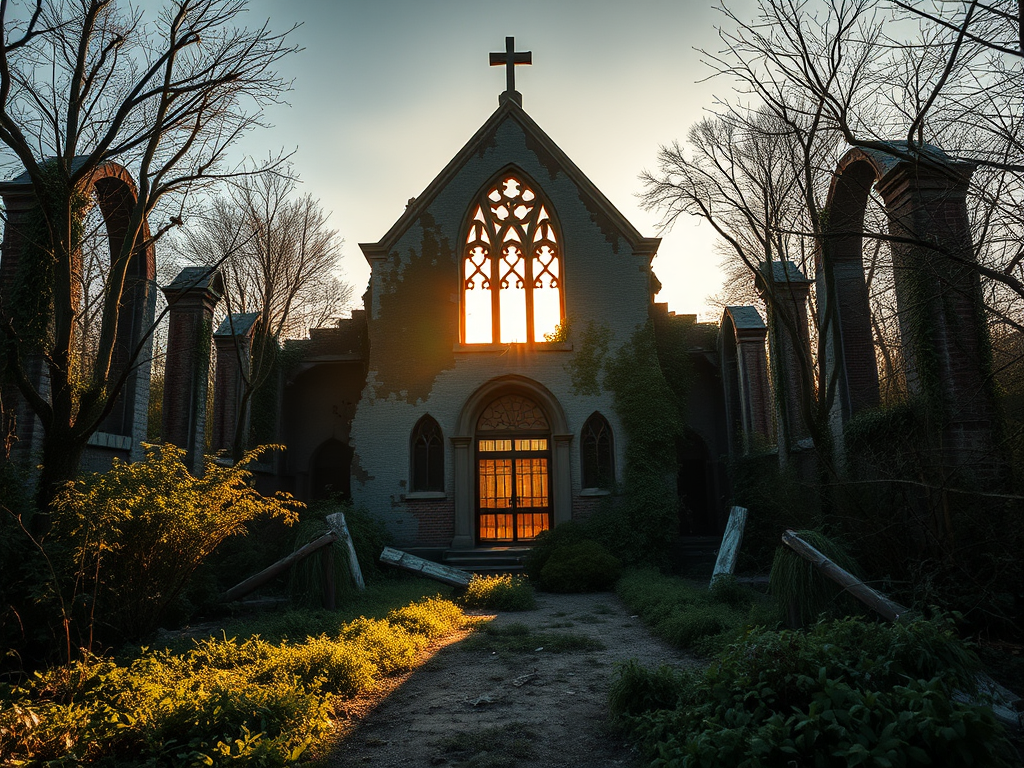
The results of what happens when the building, with ideals, is valued over the people and daily practice.
It’s appreciated if you add a like, subscribe and share this post to others. Then join the conversation. There’s plenty more where this came from so check out some previous conversations.
Keep scrolling down for more of the conversation


 In and Out of Darkness
Leave a reply to Meliza Hardeman Cancel reply