By Patrick Hardeman – In and Out of Darkness
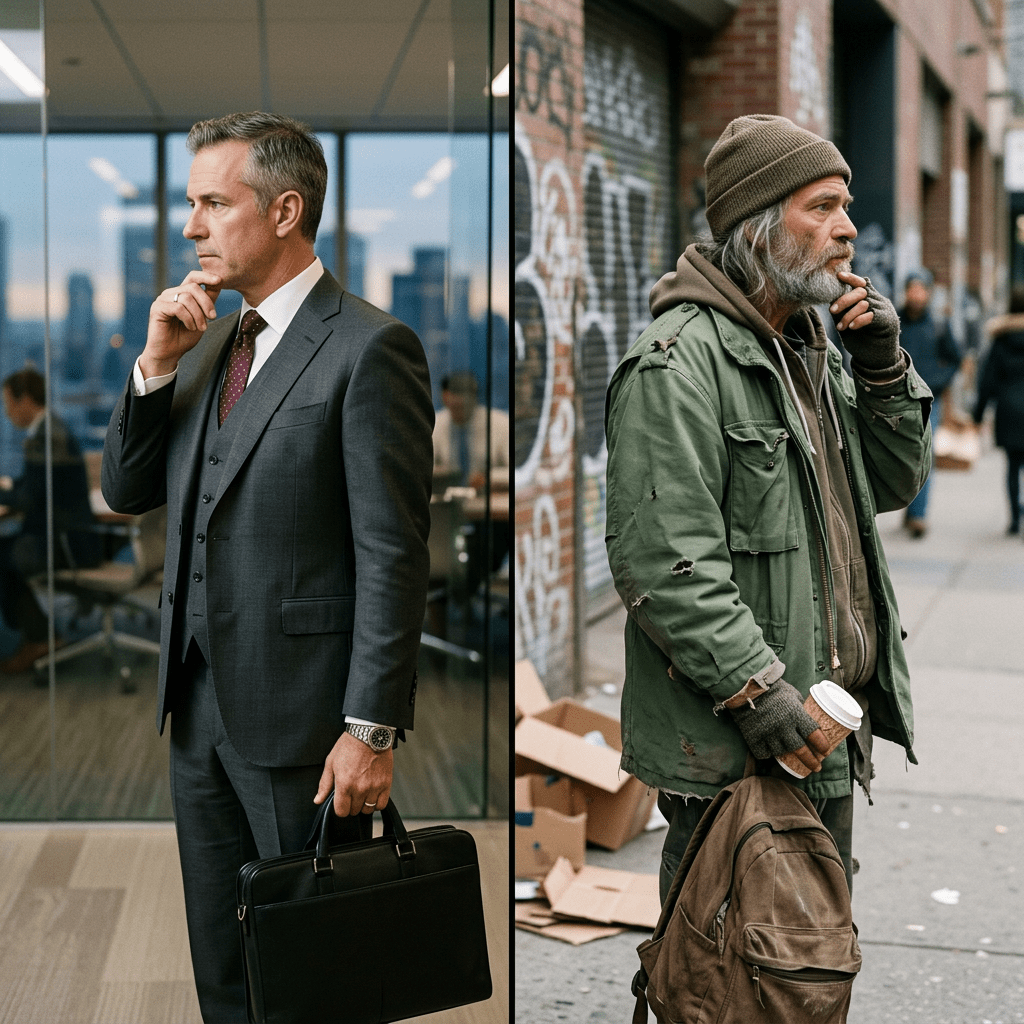
One of the most dangerous assumptions in America is the education, titles, and professional success automatically make a person honorable.
For some reason, society has convinced itself that the person wearing the expensive suit, or nice dress are inherently more trustworthy than the person wearing work boots, construction gear, or who grew up navigating the realities of the streets.
History keeps proving otherwise.
This isn’t an attack on education. Education matters. Some degrees matter. Knowledge matters. The problem is that we’ve become so obsessed with credentials that we’ve started confusing intelligence with integrity.
Those are not the same thing.
Some of the smartest people in the world have also been some of the most dishonest.
Some of the most educated people in history have used their education to exploit others.
And some of the most respected people in business and politics have left behind trails of destruction that would make a street hustler blush.
The difference is often presentation.
The street hustler is usually judged by his/her appearance before he ever opens his/her mouth.
The corporate hustler gets a corner office.
The political hustler gets a non-taxable campaign donation.
The wealthy hustler gets a publicist.
But a hustler is still a hustler.
One thing the streets teach very quickly is that actions have consequences.
Disrespect the wrong person.
Play with someone’s money.
Pretend to be loyal while secretly working against them.
Smile in their face while plotting behind their back.
Those behaviors tend to produce immediate reactions.
There isn’t a committee formed to discuss your intentions.
There isn’t a public relations team assigned to explain why your betrayal was actually a misunderstanding.
Newsflash: banking on not being found out; which is, hiding your intentions, actions, or choices is the very same thing as lying to the person or people you claim to care about.
There isn’t a consulting firm hired to redefine your behavior as strategic thinking.
The consequences are often direct, swift, and impossible to ignore.
Now compare that to many professional environments.
People sabotage coworkers and call it career advancement.
Executives hide information and call it protecting shareholders.
Politicians lie directly to the public and call it messaging.
Companies knowingly harm consumers and call it acceptable risk.
Entire industries have been built around finding more sophisticated ways to avoid accountability.
The language changes.
The behavior doesn’t.
That’s one reason many people who come from difficult environments develop a unique ability to read people.
When you’ve spent years learning how to identify danger, manipulation, dishonesty, and hidden motives, those instincts don’t disappear when you enter a boardroom.
You simply recognize the same behavior wearing a different outfit.
The guy on the corner promising something that sounds too good to be true.
The executive making promises that sound too good to be true.
Different setting.
Same playbook.
Street survival often requires people to develop discernment at an early age.
You learn that words don’t matter nearly as much as patterns.
Anyone can tell you they’re loyal.
Watch what they do.
Anyone can tell you they’re your friend.
Watch what they do.
Anyone can tell you they support your success.
Watch what they do.
The streets force people to become students of human behavior because the cost of misreading character can be enormous.
Ironically, many highly educated people never receive that lesson.
They learn economics.
They learn finance.
They learn management.
They learn marketing.
But nobody teaches them how to recognize a snake wearing a necktie or blouse.
Perhaps that’s why so many intelligent people repeatedly fall victim to obvious manipulation.
They’ve mastered spreadsheets but struggle to read people.
America itself provides endless examples.
Some of the greatest financial scandals in history weren’t committed by people lacking education.
They were committed by highly educated professionals.
People with degrees.
People with titles.
People with prestigious careers.
People trusted by the public.
The same can be said for political corruption.
Corporate fraud.
Market manipulation.
Predatory lending.
Insider trading.
History isn’t lacking examples of educated people behaving terribly.
In fact, many of the worst abuses in history required tremendous intelligence to execute.
That’s a reality we don’t discuss enough.
Intelligence determines what a person is capable of doing.
Character determines whether they should do it.
Those are entirely different measurements.
This is where people underestimate lessons learned through hardship.
Someone who grew up in survival mode often develops an appreciation for loyalty because they’ve experienced betrayal.
They appreciate honesty because they’ve seen deception.
They value respect because they’ve experienced disrespect.
They understand consequences because they’ve witnessed what happens when people ignore them.
Those lessons can produce wisdom that isn’t found in textbooks.
Unfortunately, people often hear this argument and immediately assume it’ glorifying the streets.
It isn’t.
The streets have buried too many people. Of course, not even close to Big Pharma or the alcohol industry.
Destroyed too many families.
Created too much pain.
There is nothing glamorous about poverty, violence, addiction, or crime.
The goal isn’t to celebrate those realities.
The goal is to recognize that valuable lessons can emerge from difficult circumstances.
Just as valuable lessons can emerge from education.
The mistake is believing only one path produces wisdom.
Some of the most foolish people I’ve ever encountered were highly educated.
Some of the wisest people I’ve ever encountered never stepped foot inside a university classroom.
Life has always been a more effective teacher than prestige.
The objective isn’t to stay trapped in a street mentality.
The objective is to carry forward the useful lessons.
Learn discernment.
Learn accountability.
Learn how to identify character.
Learn how to recognize manipulation.
Then leave behind the destruction, paranoia, and unnecessary conflict.
Growth means keeping the wisdom while discarding the baggage.
Most importantly, stop assuming that appearances reveal character.
A suit doesn’t make someone honorable.
A degree doesn’t make someone ethical.
A title doesn’t make someone trustworthy.
And a difficult upbringing doesn’t make someone unintelligent.
People reveal who they are through patterns, choices, and behavior.
Not through clothing.
Not through income.
Not through credentials.
Not through social status.
And most definitely not via shallow Likes on social media accounts.
The streets taught many people a lesson that society desperately needs to remember.
Character is expensive to build and easy to lose.
Integrity cannot be purchased.
And no matter how polished the presentation becomes, dishonesty eventually exposes itself.
The only thing that changes is the packaging.
The lie remains a lie.
The betrayal remains a betrayal.
And eventually, character always collects its debt.
It’s appreciated if you add a like, subscribe, add a comment, and share this post with others. Then join the conversation, don’t be afraid. There’s plenty more where this came from, so keep scrolling and check out some previous conversations


Don’t forget to be part of the conversation and it’s free to add a like!