Imagine a homeless man dies from hunger. Not metaphorical hunger, not “I haven’t eaten since breakfast” hunger, but his body literally runs out of what it needs to stay alive. Maybe people around town knew his face. Somebody went to school with him. Somebody remembers when he had a job, a car, a home, a family, plans for the future. He wasn’t born underneath an overpass holding a cardboard sign. He had a life before life started beating the hell out of him. Somewhere along the way he fell, kept falling and eventually died hungry.
Then something interesting happens: everybody shows up.
There’s a funeral. People find something black to wear. Somebody creates the social-media tribute with twelve pictures and “I can’t believe I’m writing this.” There’s a candlelight vigil, balloons, memorial shirts and bottles of liquor. The men pour some out for the homie. People who hadn’t spoken to him in years suddenly remember exactly how funny he was, how good his heart was, and how much he meant to everybody.
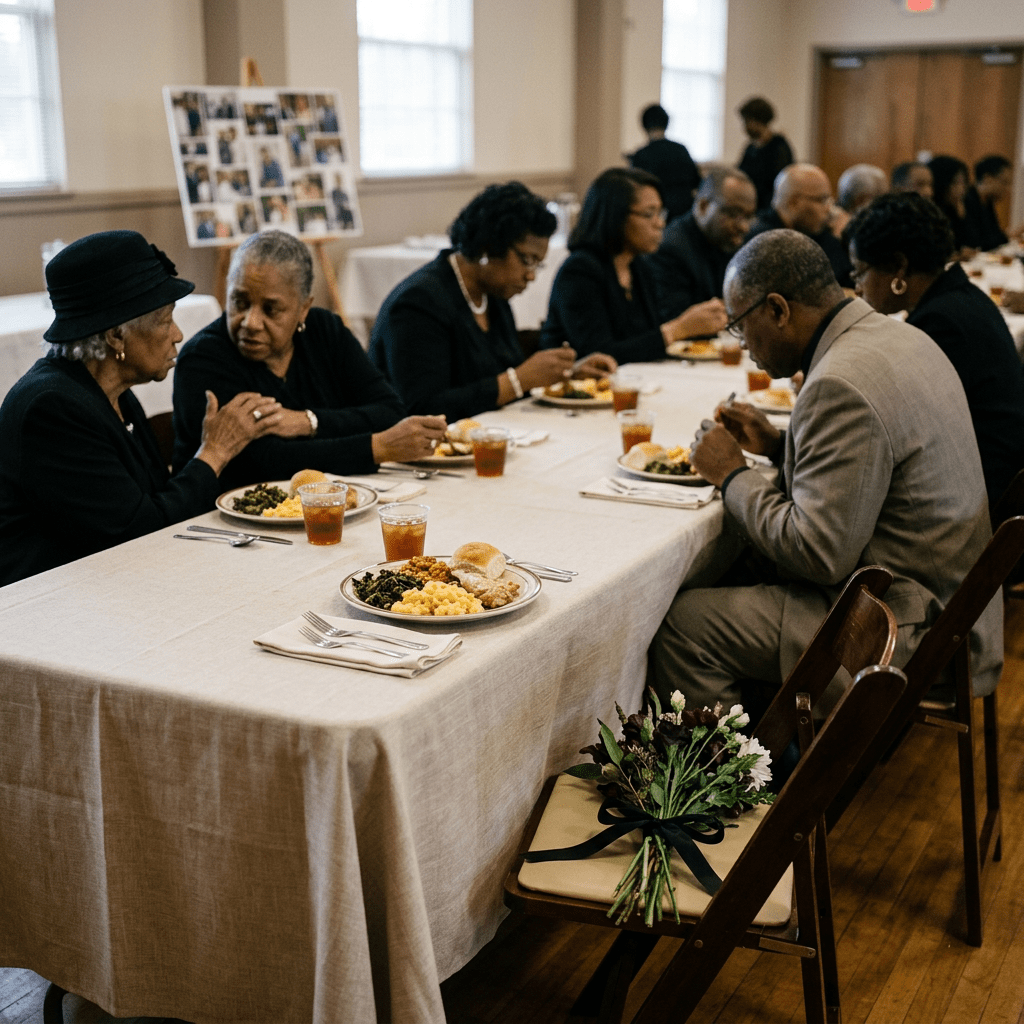
Then comes the repast, and there’s enough food to feed an army.
Chicken, macaroni and cheese, greens, rolls, potato salad, desserts, drinks and enough aluminum pans to construct a small garage. Everybody is eating, laughing, remembering the good times and making plates to take home. Somebody’s auntie has probably brought that one dish everybody knows she shouldn’t be responsible for, but grief has temporarily suspended quality control.
And sitting right in the middle of all that food is one hell of a contradiction:
The man they’re celebrating died hungry.
Somehow, we found money for flowers after he couldn’t smell them. We bought candles after he couldn’t see them. We bought liquor after he couldn’t drink it, printed shirts after he couldn’t wear one, and discovered beautiful words after he couldn’t hear them. Then we found enough food to feed fifty people in honor of the man nobody could find a plate for while he was alive.
That’s not just irony. That’s a mirror.
We Are Better at Mourning Than Maintaining
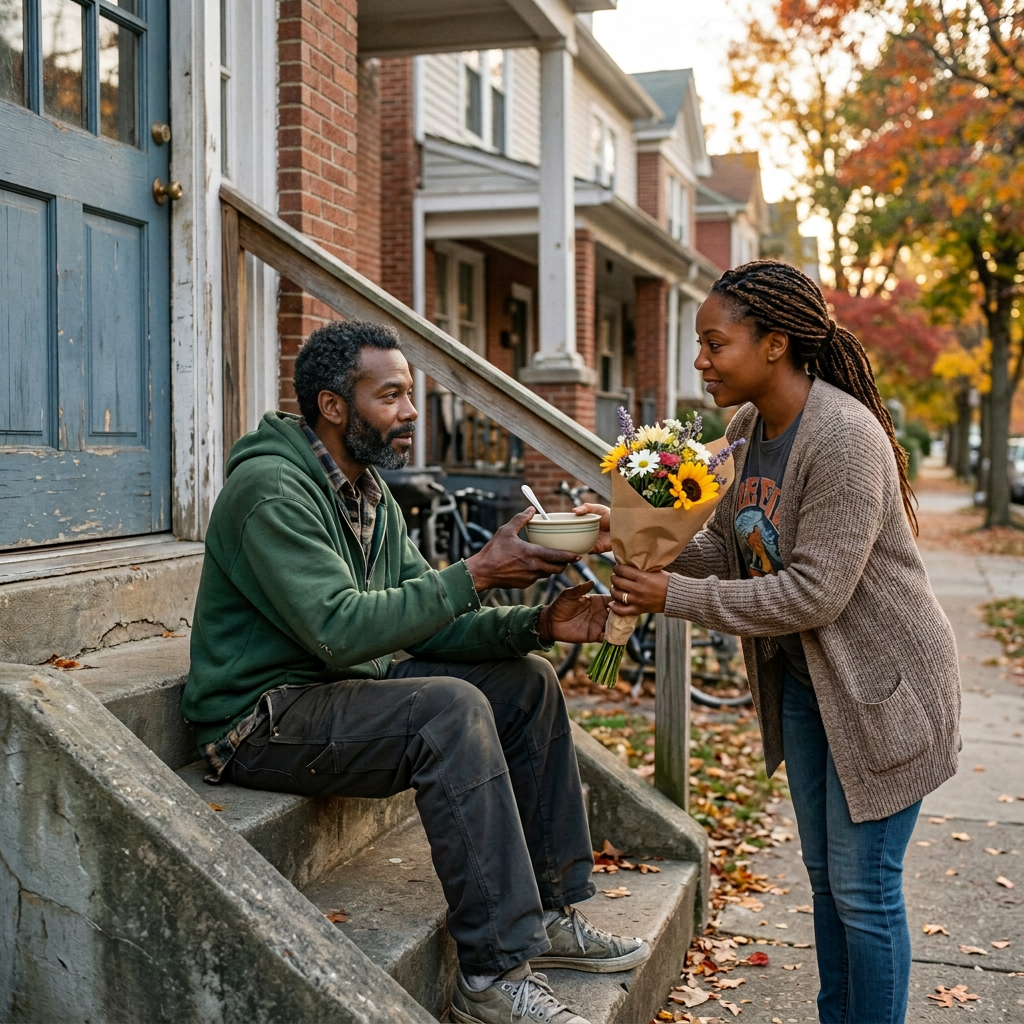
People will bring flowers to your funeral who wouldn’t bring soup while you were sick. That sounds cold until you really think about why.
There is something remarkably convenient about loving the dead. Dead people don’t inconvenience anybody. They don’t call at the wrong time, need a ride, ask for $40, need somewhere to sleep, repeat the same painful story four times, make another bad decision or need you to sacrifice part of your Saturday. The dead require ceremony. The living require commitment.
Commitment cost more.
Not necessarily money. Sometimes the person struggling doesn’t need a dime. They need your time, patience, attention or willingness to sit inside an uncomfortable conversation without checking your phone every fourteen seconds. Real care can interfere with dinner plans. It can require changing your schedule. It might even force you to hear something you’d rather not know.
A funeral, on the other hand, has a start time and an end time.
Maybe that’s why somebody can receive hundreds of dollars’ worth of flowers after death when forty dollars worth of groceries might have meant far more two weeks earlier. Flowers at the funeral publicly demonstrate, “Look how much I cared.” Soup delivered quietly to somebody struggling says something different: “I noticed you before everybody was told to.”
One is ceremony. The other is humanity.
Nobody Gives a Damn About Black Humanity; Until It’s Time to Perform It
Now let’s make this conversation uncomfortable.
Black people in America have become painfully familiar with having our humanity discovered after something happens to us. Let a Black person die unjustly and suddenly the world needs photographs proving he was somebody worth caring about. We learn that he was a father, she was a daughter, he coached children, she attended church, he served his country, she worked two jobs, he loved his family.
Why does tragedy have to provide a résumé proving a Black person was human?
We spend enormous amounts of energy discussing Black strength, Black resilience and Black perseverance. Those things are real, and there is plenty to be proud of. But somewhere along the way, strength can stop being a compliment and become society’s permission slip to ignore suffering.
He’s strong. He’ll figure it out.
She’s been through worse. She’ll be alright.
He’s a grown man.
She’s always handled everything.
And Black men know that language particularly well. We are expected to carry pain like luggage nobody else cares to see: work anyway, provide anyway, protect anyway, solve problems anyway, remain composed anyway and, whatever happens, don’t make your suffering inconvenient for everyone else.
Then a man finally collapses and everybody says, “Damn, I had no idea he was going through all that.”
Sometimes you did.
You just thought he could handle it.
Theres’s a difference.
Sometimes Depression Is Called Surviving Tuesday
We have clinical language for suffering, and that language matters. Depression, anxiety, trauma and PTSD are real conditions deserving real attention. But underneath the diagnoses is another reality that doesn’t fit neatly onto a medical pamphlet.
What you may label depression, somebody else calls surviving Tuesday.
They wake up hurting. Money is tight. Their relationship is falling apart. Their family needs something. Their job is draining the life out of them. Nobody asks how they’re doing unless the conversation eventually leads to what that person needs from them. So they shower, get dressed, answer emails, make jokes, pay bills, solve somebody else’s emergency and keep moving because Wednesday isn’t particularly interested in what happened Tuesday.
That’s survival disguised as normal life.
We make the dangerous mistake of assuming that because somebody is functioning, they must be okay. But functioning and thriving aren’t remotely the same thing. A person can answer emails while falling apart. Somebody can make an entire room laugh while privately feeling empty. A man can provide for everyone around him quietly wondering how much longer he can carry the weight. A woman can care for an entire family while realizing nobody seems particularly interested in caring for her.
Some people don’t look strong because they feel powerful. They look strong because life never gave them permission to be anything else.
And Black Families Don’t Get a Pass
This conversation cannot stop with what America does to Black people. If we’re serous about Black humanity, then we have to be willing to examine what we sometimes do to one another.
Black families can repeat the exact same expectations we criticize society for imposing on us. Boy, toughen up. Stop feeling sorry for yourself. Other people have it worse. Pray about it. You’ll be alright.
Prayer may be important to you, but God gave people arms too. Occasionally use them to help carry something.
We cannot spend generations demanding that America recognize the full humanity of Black people while sometimes denying one another permission to experience the full range of being human. Strong Black men get tired. Strong Black women get tired. Parents get tired. Veterans get tired. Providers get tired. Caretakers get tired. Even the person everybody calls when their world catches fire eventually gets tired of being the damn fire department.
Sometimes the strongest person in the family doesn’t need another speech about how strong they are.
They need somebody else to carry the groceries.
“Check on Your Strong Friends” Sounds Great on Instagram
We’ve all seen it: Check on your strong friends.
Beautiful phrase. Put it over a sunset, add some piano music and you’ve got yourself 40,000 shares.
Then we text the strong friend, “You good?”
What exactly do we expect them to say?
“Actually, no. Thank goodness you sent this highly detailed psychological assessment.”
Of course they’re going to say they’re good. They’ve probably been saying it for twenty-plus-years.
Ask better questions. Have you eaten today? Are you sleeping? Do you need groceries? Do you need company? What’s weighing on you right now? Is there something you’re dealing with that nobody knows about? Do you need help with something specific?
And when they answer, resist the urge to immediately become a motivational speaker. Sometimes people don’t need inspiration. Sometimes they don’t need your brilliant life advice. Sometimes they don’t need to hear how everything happens for a reason.
Sometimes the motherfucker needs a sandwich.
That’s it.
Humanity doesn’t always require a nonprofit organization, congressional legislation or a GoFundMe campaign. Sometimes humanity is simply noticing that somebody you supposedly care about is drowning before somebody announces the funeral arrangements.
Give Me the Flowers While I Can Smell Them
I’m not against funerals, repasts, memorial shirts, candlelight vigils or celebrations of life. Those rituals matter to the living. They give families a place to grieve, remember, laugh and temporarily hold each other together.
But we should ask ourselves why some people. receive more visible love in the seventy-two hours after they die than they received during the final year they were alive.
Bring the flowers now. Make the phone call now. Buy the meal now. Visit now. Apologize now. Ask the uncomfortable question now. Sit beside somebody now. Tell your brother you love him while his ears can still hear you. Tell your father you appreciate him while his chest is still rising. Tell your friend you see that he’s struggling before his obituary suddenly teaches everybody how much he mattered.
Because there’s something profoundly backwards about feeding fifty people in celebration of somebody who died because nobody fed one.
And maybe that’s the question worth carrying away from this:
How many people are we preparing to mourn beautifully whom we’re currently failing to love practically?
Don’t wait until somebody’s funeral to become generous. Don’t wait for an obituary to discover their humanity. Don’t spend hundreds of dollars celebrating the life of someone you couldn’t spare twenty dollars or twenty minutes to help live it.
Give people their flowers while they can still smell them.
And if I ever reach the point where I’m hungry, hurting or down and out, do me one favor;
Don’t bring me damn flowers when I’m dead if you couldn’t bring me soup while I was alive.
It’s appreciated if you add a like, subscribe, add a comment, and share this post with others. Then join the conversation, don’t be afraid. There’s plenty more where this came from, so keep scrolling and check out some previous conversations


Don’t forget to be part of the conversation and it’s free to add a like!