By Patrick Hardeman – In and Out of Darkness
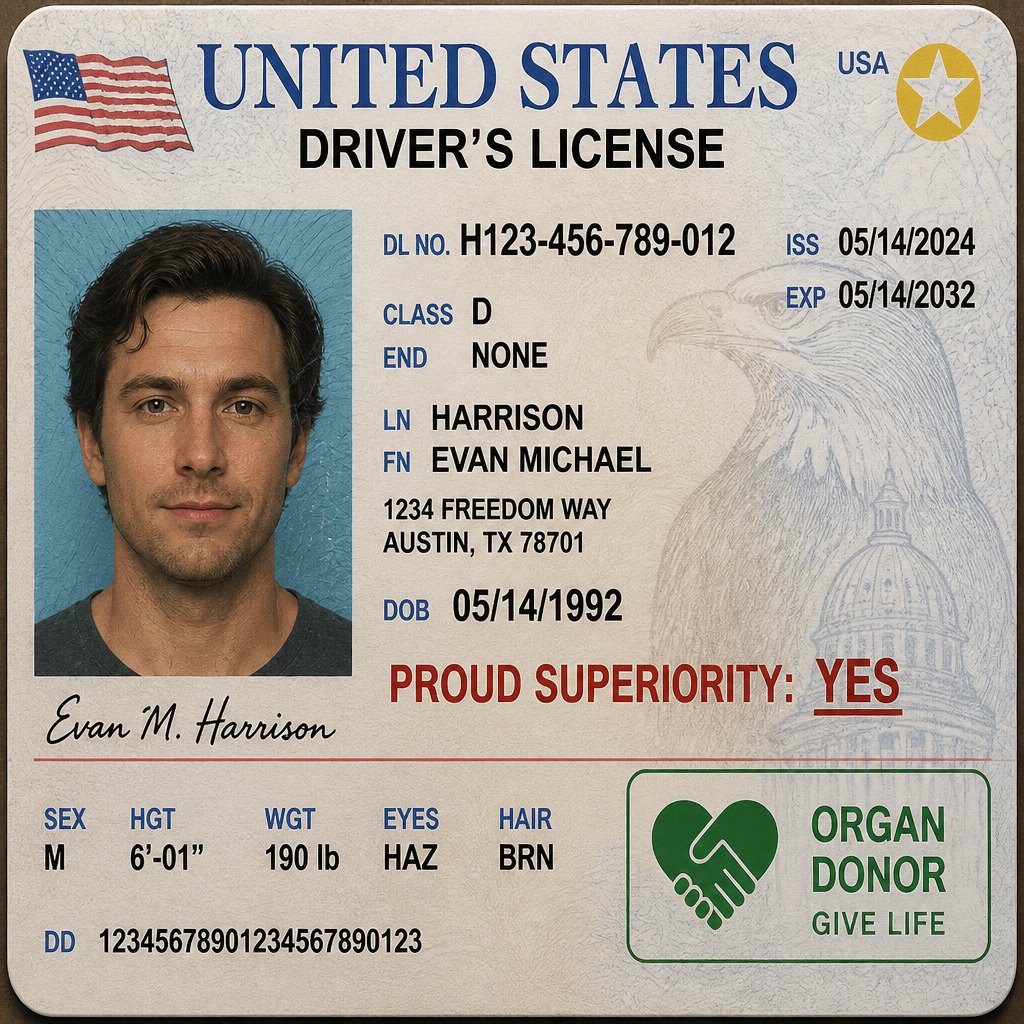
Maybe it’s time we add another identifier to the driver’s license.
Organ donor? Check.
Corrective lenses? Check.
Proud racist?
Hear me out.
If you’re genuinely proud of believing another race is inferior, why shouldn’t that conviction be documented? Not as punishment. I’m simply trying to respect your beliefs.
Because what happens when the universe decides you need a life-saving organ transplant?
A healthy minority’s organ shouldn’t suddenly become good enough to fill a hole in your hatred. And surely you wouldn’t want to wake up with a Black person’s kidney, an Asian person’s liver, or a Hispanic person’s heart inside you.
Imagine living with even more cultural guilt.
Seems like a win-win.
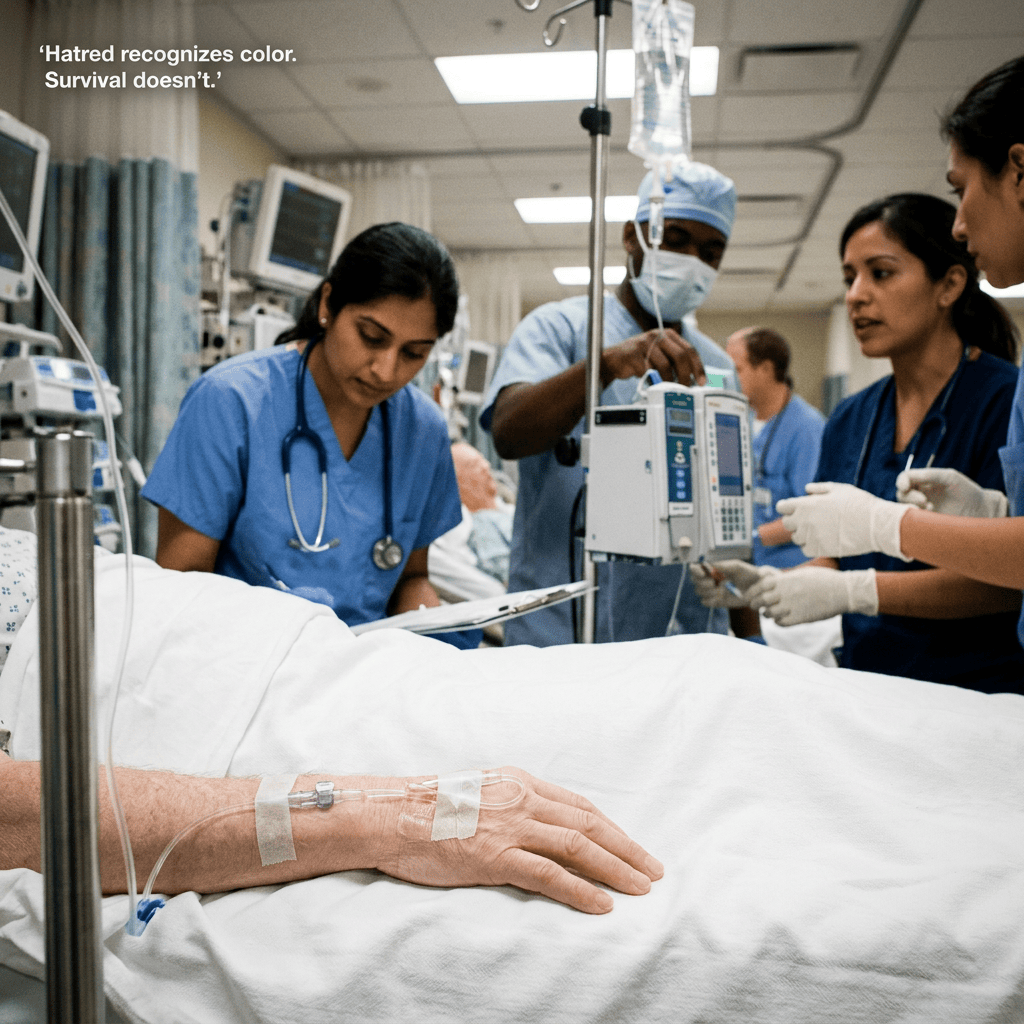
Of course, actual organ transplantation doesn’t care about your racial preferences. Doctors are concerned with things that matter: blood type, tissue compatibility, organ size, medical urgency, waiting time and other medical factors. Race itself doesn’t determine whether one person’s organ can save another person’s life.
Apparently, the human body never received the memo about racial superiority.
But why stop with organs?
If you’re committed to the belief that minorities are beneath you, let’s respect the entire commitment.
Before receiving a medical procedure, check who helped develop it. Before accepting blood, make sure you’re comfortable with who donated it. Before taking medication, perhaps investigate the scientists responsible for it.
This could become exhausting rather quickly.
Take Dr. Charles Drew. A Black physician and medical researcher, Drew pioneered methods for processing and preserving blood plasma and became one of the most important figures in the development of modern blood banking.
That’s inconvenient.
Especially considering America’s long history of treating Black people as something less than human while having absolutely no problem benefiting from their bodies, labor, intelligence and discoveries.
That contradiction didn’t begin yesterday.
Black bodies were valuable enough to work fields while Black people weren’t’ considered worthy of freedom. Valuable enough to build wealth while being denied the wealth they created. Valuable enough to fight America’s wars while returning home to segregation. And even valuable enough to become unwilling subjects of medical exploitation while being denied equal treatment by the same society benefiting from them.
That’s an impressive amount of dependency for people supposedly considered inferior.
Yet somehow the racist has always found a way to make it work.
Take the labor.
Take the knowledge.
Take the music.
Take the inventions.
Take the culture.
Take the medical discoveries.
And if necessary, apparently take the kidney too.
Hell, we’re watching another version of this contradiction play out right now.
For years, migrant workers have bent their backs in American fields picking the fruits and vegetables that somehow make their way into grocery stores without many people ever wondering whose hands put them there. Roughly four out of every ten hired crop workers have lacked legal work authorization.
Then America decided rounding up and removing thousands of those same workers somehow disconnected from the food sitting on America’s table.
Funny how that works.
You can hate the migrant picking your lettuce, but you still want the lettuce.
You can demand that he disappear, but apparently the strawberries are supposed to pick themselves.
And when fewer workers are available, production doesn’t magically stay the same. Crops can be lost, labor becomes more expensive, domestic production can fall, and eventually that pain reaches the person standing in the grocery aisle wondering when a damn salad became a car payment.
Once again, the people treated as unwanted become remarkably important the moment their work is missing.
Take the labor.
Take the food.
Take the contribution.
Just make sure the person providing it stays invisible enough that you never have to question the hatred.
Just don’t take a moment to question whether the hatred makes any damn sense.
That’s what makes the transplant question so interesting.
Racism becomes considerably harder to defend when your survival requires something from the very people you’ve spent your life believing shouldn’t be equal to you.
Your failing heart doesn’t care about white supremacy.
Your kidneys aren’t interested in replacement theory.
Your blood doesn’t recognize a racial hierarchy.
And cancer certainly isn’t checking your voter registration before arriving.
The human body can be brutally disrespectful toward ideology.
So perhaps that driver’s-license designation really would help.
PROUD RACIST: YES ( )
There you go.
Now everybody knows exactly how seriously you take your beliefs.
No minority organ.
No minority blood.
No procedure pioneered by a minority.
No invention developed by one.
And certainly no assistance from the people you’ve decided are beneath you.
You don’t get to spend your healthy years demanding separation and then discover multiculturalism when you kidneys fail.
Stand on business.
Because white racism has spent centuries performing one remarkable trick: convincing itself that non-white people are inferior while repeatedly depending upon those same people to build, defend, feed, entertain, advance and sometimes even save the society benefiting from their exclusion.
That’s not superiority.
That’s dependency wearing an ego.
So maybe “Proud Racist” doesn’t actually need to appear on a driver’s license.
But if you’re determined to spend your life believing another human being beneath you, perhaps you should be equally determined not to depend upon them when your own body decides otherwise.
After all, nobody wants a little melanin interfering with their principles.
Right?
It’s appreciated if you add a like, subscribe, add a comment, and share this post with others. Then join the conversation, don’t be afraid. There’s plenty more where this came from, so keep scrolling and check out some previous conversations

 In and Out of Darkness
Don’t forget to be part of the conversation and it’s free to add a like!