By Patrick Hardeman–In and Out of Darkness
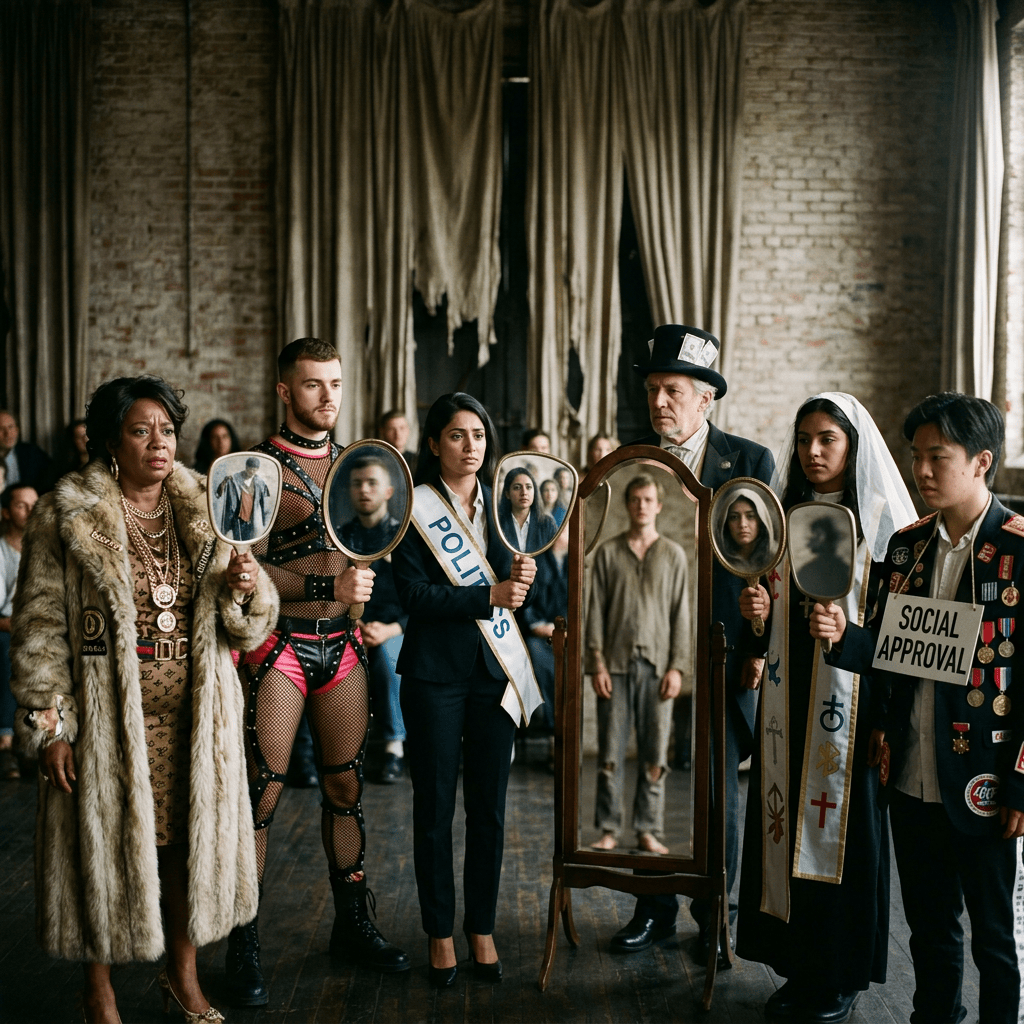
At some point, we have to ask ourselves an uncomfortable question: How much of what we fiercely defend belongs to us?
I’m not talking about our homes, families, accomplishments or the last piece of chicken in the refrigerator; that might legitimately require conflict. I’m talking about identity. The beliefs, behaviors, appearances, politics, possessions and personalities we carry so personally that questioning them feels like an attack.
There is a statement circulating online, often attributed to the late, great George Carlin, that essentially says when your identity becomes your ideology, an idea is no longer simply an idea; it becomes you. Challenge the belief and the person hears an attack. Facts don’t matter anymore, logic disappears and humor dies because admitting the idea is wrong feels like admitting you are wrong. So instead, people double down louder, angrier, and sometimes considerably dumber.
Ironically, the attribution to Carlin itself appears questionable, which almost makes the point better. Somebody attached a trusted identity to some words, people liked what they heard and passed it along. Apparently, even an article about questioning identity has to check somebody’s ID at the door.
But I think this goes much further than politics or ideology.
Some identities were handed to us. Others we created ourselves.
We inherit beliefs the same way we inherit names, recipes, property and unfortunately bad knees. We’re taught who the good people are, who the bad people are, what respectable people do, which groups can be trusted, and what men should be, what women should be, what success looks like and sometimes even who we’re supposed to hate.
Some of those lessons contain wisdom earned through generations. Others are simply somebody else’s fear, prejudice, insecurity or ignorance that survived long enough to become tradition.
Imagine inheriting an old chair that’s been passed through your family for generations. Everybody insists it’s priceless, but the damn thing has three legs, termites and smells like somebody died in it, twice. At some point, respecting your ancestors doesn’t require continuing to sit in the chair.
Yet we do exactly that with beliefs.
Granddad believed it. Dad repeated it. The neighborhood reinforced it. The political party packaged it. Social media gave it a meme. Now you’re forty-five years old fighting strangers online over an ideological family heirloom nobody ever bothered to have appraised.
But here’s where this conversation gets more uncomfortable: we can’t blame everything on our parents, society or politics. Sometimes we’re fighting to protect identities we created ourselves.
Most of us go through periods in life where we take unnecessary risks, chase attention, need validation or confuse being desired with being valued. That’s part of living long enough to accumulate some embarrassing evidence against yourself.
Sexuality is an easy example because somewhere along the way we’ve confused sexual freedom with the requirement to advertise it. There may have been a period when overly exposing your sexuality made you feel powerful, attractive or wanted. Maybe it got you plenty of attention too. But attention isn’t automatically respect, and being desired doesn’t mean someone values you beyond what they can temporarily get from your body.
If the outcome repeatedly leaves you feeling like disposable meat, at what point do you stop blaming everybody who comes to the butcher shop and reconsider why you’re still standing in the display window?
That’s not an argument for shame. It’s an argument for awareness.
Your body can be beautiful. Your sexuality can be healthy. You can dress however the hell you choose. But if you’re simultaneously fighting for people to recognize your intelligence, maturity, character and value while continuously presenting your body as the loudest thing in the room, maybe the world isn’t receiving mixed signals.
Maybe you’re sending them.
And fellas, don’t get comfortable. We’re not escaping through the emergency exit.
Some of us simply put different merchandise in the window.
We pull up in cars costing more than our investment accounts because somewhere along the way the vehicle became our personality. Designer clothes, jewelry, muscles, money, job titles, women; anything capable of announcing I’ve made it before anybody gets close enough to discover whether we’ve actually built anything inside ourselves.
The car is beautiful, brother/sister. Congratulation.
Now park it and come inside so we can find out whether you know anything.
Because that’s the question underneath all of this:
What do you actually bring to the table when everything you’re displaying gets removed from it?
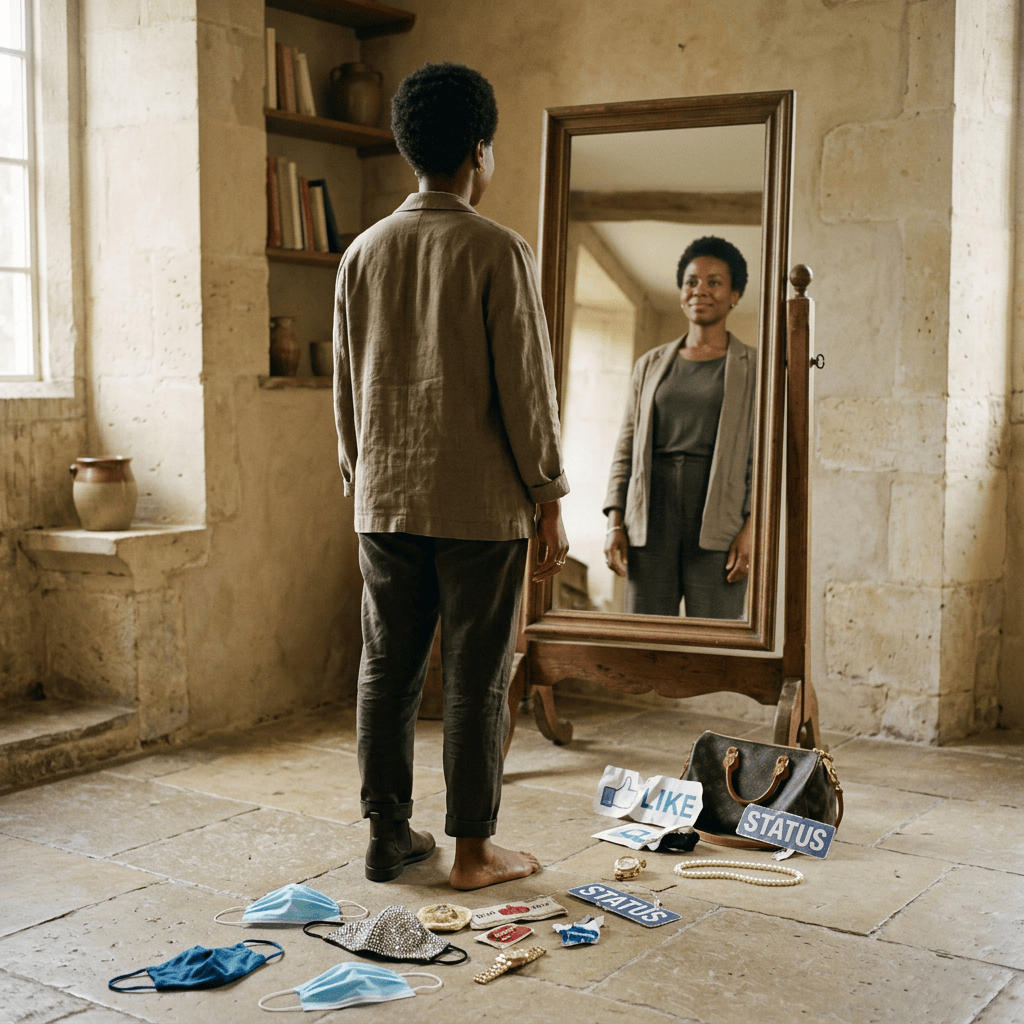
Take away the body. Take away the car. Take away the title, followers, political affiliation, last name, uniform, neighborhood and whatever group automatically applauds you.
What’s left?
Have you built knowledge? Awareness? Character? Accountability? Emotional maturity? Can you listen? Can you learn? Can you admit when you don’t know something? Can you sit across from somebody who disagrees with you without turning into a malfunctioning smoke detector?
There’s nothing wrong with enjoying your beauty, sexuality, car, money, career or anything else you’ve earned. The problem begins when something that was supposed to be part of your life becomes the identity you have to protect.
Then growth starts feeling like betrayal.
That’s how people become trapped by their own history. They’ll proudly say, “This is who I’ve always been,” as though that’s automatically a compliment.
Hell, I hope not.
I’ve been alive long enough to have several previous versions of myself that shouldn’t be allowed anywhere near the controls.
Maybe you were wild at twenty-five. Maybe you needed everybody to notice your body at thirty. Maybe you thought being feared meant being respected. Maybe sleeping with more people made you feel more desirable. Maybe being the loudest person in the room made you feel like the strongest.
Fine.
Who are you now?
There is no trophy for remaining loyal to a version of yourself that stopped working years ago. Or you long ago realized the results that came from those versions, wouldn’t be prescribed as repeatable.
Yet people will defend that old identity because admitting they’ve outgrown it requires acknowledging that some of their choices didn’t produce what they thought they would. Instead of saying, I learned something, they’ll repeat the behavior, receive the same results and demand that everyone else change the definition of the outcome.
That’s not freedom.
That’s being held hostage by a person you used to be.
And this is where inherited identity and self-created identity eventually meet. Whether somebody else handed us the costume or we stitched the damn thing together ourselves, there comes a point when adulthood requires us to decide whether we still want to wear it.
Politics can become a costume.
Race can become one.
Wealth, poverty, sexuality, religion, masculinity, femininity, victimhood, toughness, education and even professional success can become costumes when we stop allowing ourselves to exist beyond them.
Social media only makes it easier because now we can build an entire audience around the character we’ve created. Follow the people who agree with us, block the ones who challenge us, post what gets applause and eventually become prisoners of the very image we’re selling.
Now changing isn’t merely difficult.
Changing might disappoint the audience.
But whose damn life are we living?
The real test isn’t how passionately we can defend who we’ve been. It’s whether we’re capable of examining who we’re becoming.
Where did this belief come from? Why do I still behave this way? Is this producing the life I claim to want? Am I doing this because it represents me; or because I’ve spent so many years doing it that changing would require admitting I’ve learned something?
Maybe our parents were wrong.
Maybe our political party is wrong about something.
Maybe our community got something wrong.
Maybe the person we love is wrong.
Maybe the person staring back at us in the mirror has been wrong too.
None of that has to destroy our identity.
Maybe it finally gives us the opportunity to build one.
From In and Out of Darkness, “A revolution starts with a simple conversation, not turmoil and bloodshed.” However, when simple conversations are repeatedly ignored or disrespected by those who have controlled the pain of others for so long, pain may eventually become the only thing they themselves understand.
Conversation matters because growth requires somebody to be willing to hear something uncomfortable; including us.
We don’t have to inherit every fight. We don’t have to preserve every tradition. We don’t have to continue every behavior simply because we’ve done it for years. And we certainly don’t have to spend the rest of our lives defending somebody else’s broken identity; or our own.
Sometimes the most courageous thing we can do isn’t defend who we are.
It’s finally ask:
Who am I without the costume?
Food for thought.
It’s appreciated if you add a like, subscribe, add a comment, and share this post with others. Then join the conversation, don’t be afraid. There’s plenty more where this came from, so keep scrolling and check out some previous conversations

 In and Out of Darkness
Don’t forget to be part of the conversation and it’s free to add a like!