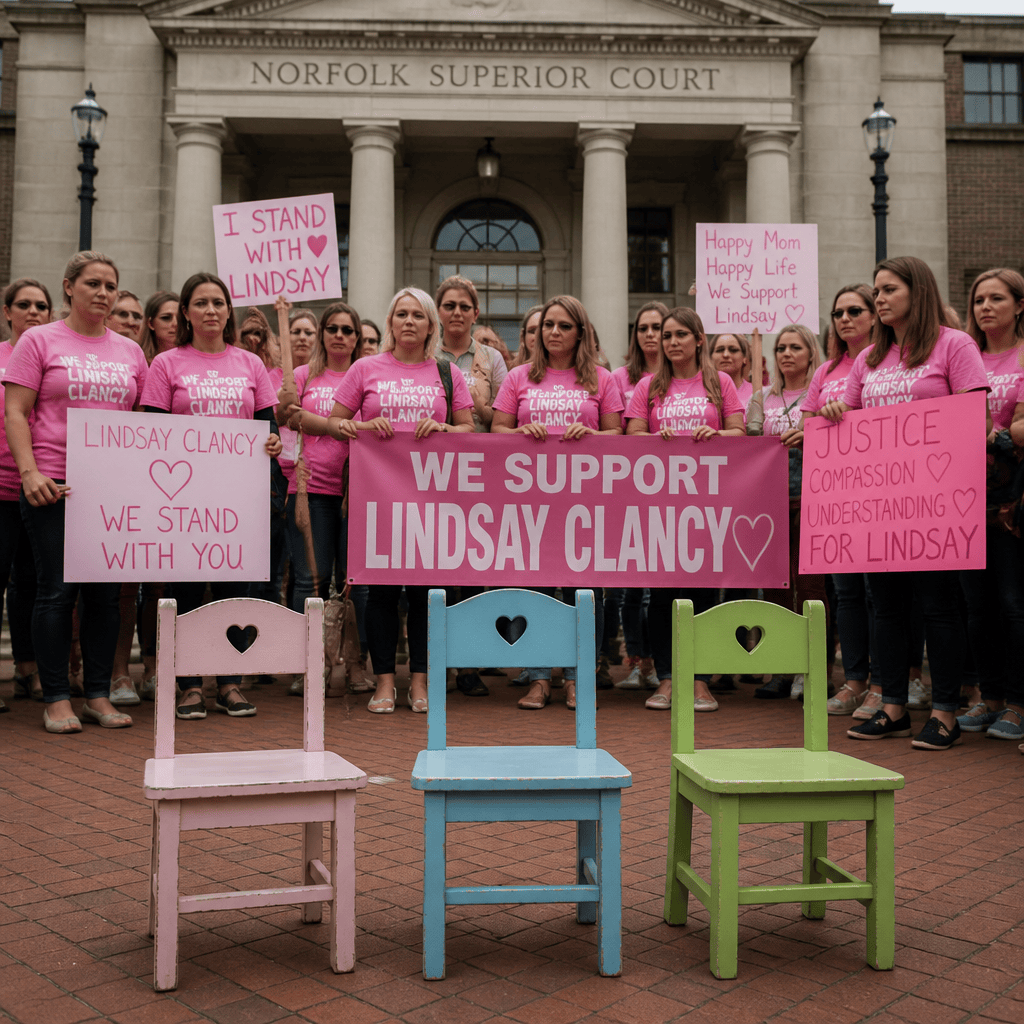
By now, most of us have probably heard about Lindsay Clancy, the Massachusetts woman accused of killing her three young children. Her defense argues that severe postpartum mental illness, including postpartum psychosis, affected her criminal responsibility. Her first trial ended in a mistrial after the jury could not reach a unanimous verdict.
Before somebody starts warming up their keyboard, let me save you the cardio: I am not telling you what verdict you should want.
Postpartum psychosis is real. Mental illness is real. People experiencing psychosis can become disconnected from reality, and our healthcare system absolutely needs to recognize and treat mothers before tragedy becomes the alarm bell.
But three children are also really dead.
That part keeps getting strangely quiet.
What caught my attention almost as much as the trial itself were the hundreds of women who showed up wearing pink in solidarity. Their stated purpose included raising awareness about maternal mental illness and failures in treatment. Fine. But let’s acknowledge what makes this conversation uncomfortable: they were publicly rallying around the mother accused of killing her three children.
Now, if your mother was standing outside that courthouse wearing pink while passionately explaining why another mother shouldn’t be criminally responsible for killing all three of her children, I’m not saying you should be nervous.
I’m just saying maybe today isn’t the day to tell Mom her meatloaf sucks.
Read the room.
The bigger issue, however, is precedent.
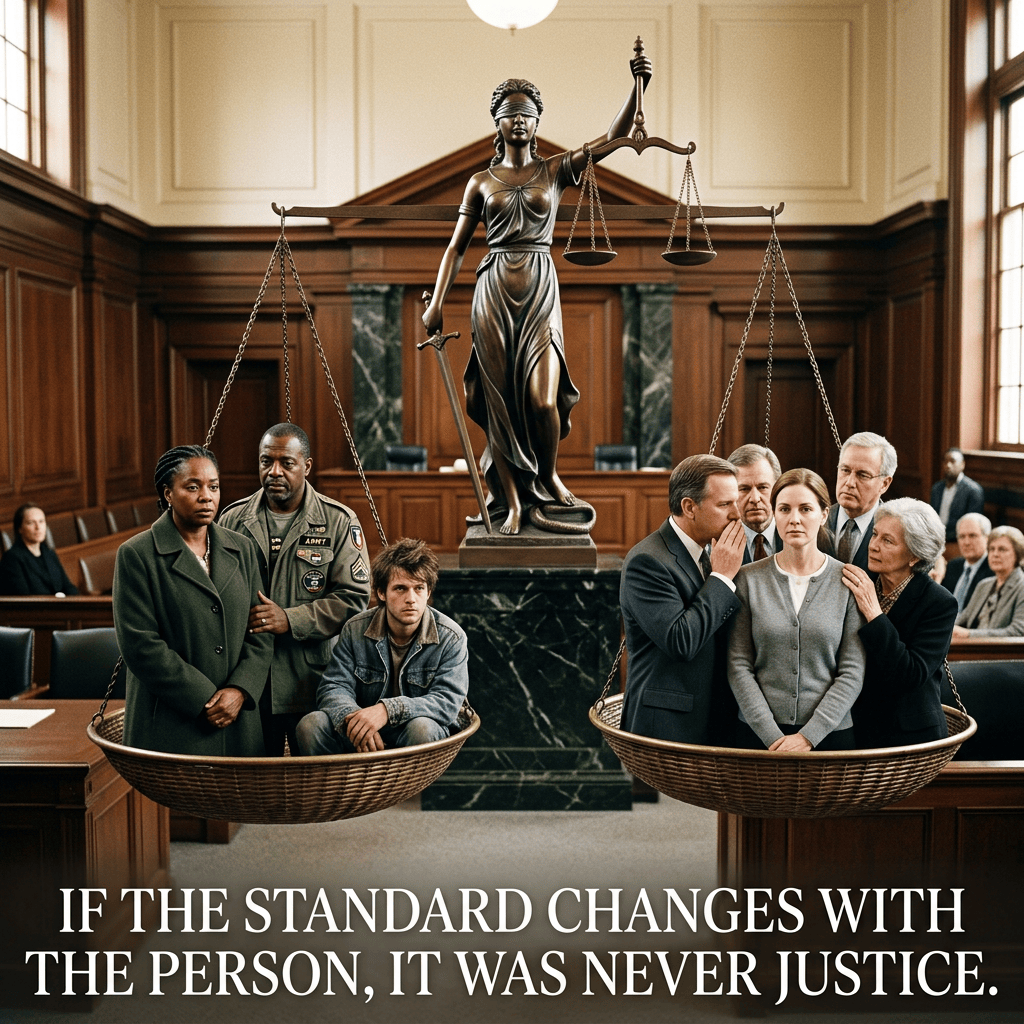
If postpartum psychosis can remove criminal responsibility for killing three children, then we need to decide whether we actually believe that principle; whether we only believe it when we sympathize with the defendant.
Because America has an interesting relationship with sympathy.
We love circumstances when circumstances belong to people we’re comfortable understanding. Suddenly we can discuss trauma, mental illness, medications, hormones, upbringing, healthcare failures and every chemical floating through the human brain.
Change the defendant, though, and sometimes America’s psychology degree disappears faster than toilet paper during COVID.
So let me make this uncomfortable.
Would hundreds of Americans have shown up wearing matching shirts in support of a Black mother accused of killing her three children?
Would television coverage spend the same amount of time asking what happened to her before asking what she did?
Would strangers describe her as a suffering mother who desperately needed help?
Or would we hear words like evil, dangerous, monster, and murderer before her psychiatric evaluation finished printing?
That question matters because Black women do not enter America’s healthcare or criminal-justice systems carrying the same historical assumptions as White women. Black women have repeatedly had to fight stereotypes that portray them as stronger, less vulnerable, less innocent, more aggressive, and somehow capable of absorbing pain that would generate sympathy for somebody else.
Apparently melanin comes with complimentary emotional body armor.
Nobody told the nervous system.
And this is where America’s favorite sport enters the arena: selective equality.
If mental illness reduces criminal responsibility, apply that standard equally.
Give it to the Black mother.
Give it to the father.
Give it to the combat veteran suffering form severe PTSD and psychosis.
Give it to the schizophrenic defendant hearing voices.
Give it to the poor defendant who doesn’t have a sympathetic face, expensive experts, or hundreds of supporter color-coordinating outside the courthouse.
If that suddenly makes you uncomfortable, congratulations. We found the problem.
Because compassion cannot be equality’s seasonal employee.
A diagnosis may explain someone’s actions. Whether it legally excuses those actions is another question entirely. Courts have wrestled with that distinction forever because understanding why somebody committed a horrific act doesn’t automatically answer whether that person should be held responsible for it.
We understand this everywhere else.
Alcohol may explain why somebody drove drunk. The family still has to bury the person they killed.
Trauma may explain someone’s abusive behavior. Their spouse doesn’t become a complimentary punching bag.
Mental illness can explain behavior while victims remain victims.
And Cora, Dawson and Callan cannot disappear from this conversation because the adult story became more politically or emotionally interesting.
They were five, three, and eight months old.
They didn’t choose their mother’s healthcare.
They didn’t choose America’s mental-health system.
They certainly didn’t choose to become the evidence used in our latest national debate.
So, whatever precedent America wants from this case, choose carefully.
If severe mental illness means Lindsay Clancy should not be criminally responsible, then have the courage to defend that same principle when the next defendant doesn’t look like her.
When she’s Black.
When he’s a man.
When he’s a veteran.
When she’s poor.
When the defendant isn’t sympathetic enough for matching shirts and television interviews.
Because equality isn’t proven when we give compassion to people we understand.
It’s proven when the rules remain the same for people we don’t.
Otherwise, we haven’t established a principle at all.
We’ve established a preference.
Precedent. Set.
And when the next defendant asks America to apply the exact same standard?
Checkmate.
It’s appreciated if you add a like, subscribe, add a comment, and share this post with others. Then join the conversation, don’t be afraid. There’s plenty more where this came from, so keep scrolling and check out some previous conversations


Don’t forget to be part of the conversation and it’s free to add a like!