By Patrick Hardeman – In and Out of Darkness
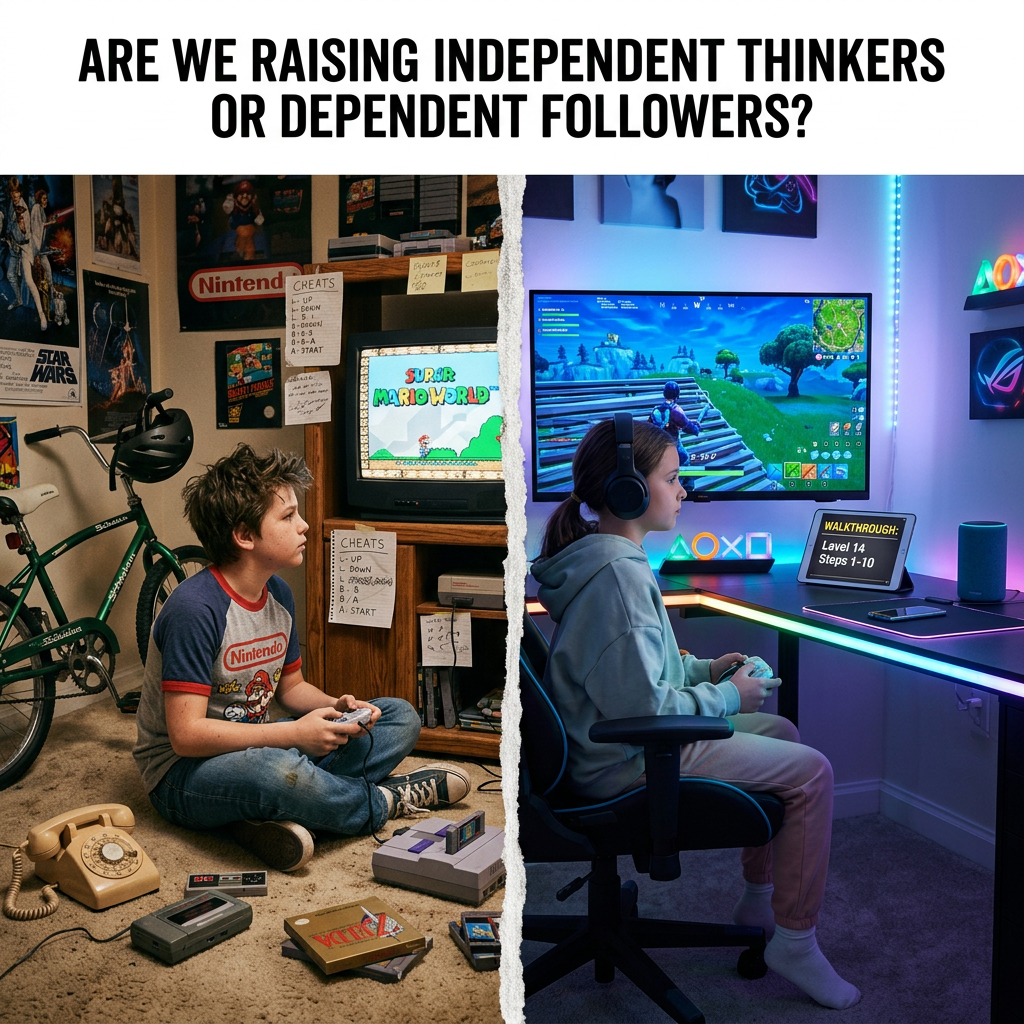
There is a particular kind of trauma shared by people who grew up playing video games in the late ’80s and 90’s. You could spend an hour fighting your way through a game, finally reach a level you had never seen before, make one stupid jump, lose your last life; and that was it. No autosave. No glowing trial telling you where to go. No helpful voice saying, “Perhaps you should try the door on your left.” The game basically looked you in the eye and said, “Well, you clearly learned nothing. Start over.”
And we did.
Games like Super Mario Bros., Contra, The Legend of Zelda, Donkey Kong and Tetris weren’t simply entertaining us. They were training young brains to remember patterns, recognize sequences, navigate unfamiliar spaces, develop strategies and tolerate failure. You learned where the enemy appeared, which pipe went where, when to jump and what happened the last six times your impatient behind jumped too early.
Nobody drew a glowing yellow line showing you where to go.
You were the GPS.
And somehow we did this while remembering a parent’s work number, Grandma’s number, three friends numbers and probably Pizza Hut. (If you could afford to eat out.) Today, take away someone’s contact list and half of us couldn’t call our own children.
Failure was also part of the deal. If Mario fell into the same hole seven times, Nintendo didn’t lower the hole. There was no meeting with Bowser about creating a more inclusive bridge experience. You changed what you were doing. You ran faster, jumped later, watched somebody else or asked the kid down the street who had already figured it out.
There was another factor shaping our independence: many households had two working parents, which meant children were often expected to become more self-sufficient. We had responsibilities, made decisions, solved disagreements and occasionally learned the hard way that being wrong wasn’t the end of the world. Our parents couldn’t always intervene, and frankly, many wouldn’t have even if they could. They understood that protecting children from danger was one thing; protecting them from every disappointment was another.
Today, I sometimes wonder whether too many parents are raising their children through the unresolved insecurities of their own childhoods. Rather than allowing their children to experience rejection, failure or the embarrassment of being wrong, they rush to soften every landing. Little Johnny didn’t make the team? Obviously, the coach is incompetent. Little Susan failed her assignment? Clearly, the teacher has a personal vendetta. And heaven forbid somebody finishes last. Apparently, everyone deserves a trophy simply for waking up and locating their shoes.
But what happens when children repeatedly receive praise without achievement, protection without accountability and confidence without competence? We shouldn’t be surprised when some grow into arrogant young adults who confuse disagreement with disrespect, correction with persecution and personal responsibility with somebody else’s problem. Self-esteem without accountability isn’t character development; it’s entitlement wearing a graduation gown. Parent’s may believe they’re protecting their children’s confidence, but sometimes they’re shielding them from the very lessons that build resilience, humility and character. After all, the world doesn’t owe you a victory simply because your mommy or daddy couldn’t bear watching you lose.
There’s another uncomfortable truth some parents need to confront: doing everything for your children doesn’t necessarily make you a better parent. Especially when you’re constantly handing them things they haven’t earned or solving problems they’re perfectly capable of handling themselves. Sometimes that generosity has more to do with satisfying your own emotional needs than developing their abilities. Every time you unnecessarily rescue a child, you may be robbing them of that opportunity to discover what they’re capable of accomplishing. You’re increasing your own self-esteem by stealing theirs. There’s a tremendous difference between giving your children the tools to succeed and making sure they never have to learn how to use them.
The last part mattered.
Before YouTube tutorials and instant walkthroughs, information traveled through the ancient wireless technology known as other children.
“Hit that block.”
“Go behind the wall.”
“Duck right there.”
“My cousin said there’s another level.”
One kid figured something out, communicated it to another, and suddenly the whole neighborhood became smarter.
Yes, we had cheat codes. Let’s not rewrite history like we were innocent little Nintendo monks. Contra gave us one of the most famous cheat codes ever. But even cheating required somebody to discover the damn thing, pass it along, and then you had to remember the sequence and enter it correctly. We advanced with information. Today, too often, you can cheat with a credit card. (Parents pay the way.)
And that difference matters.
Research has shown that certain kinds of video-game play can engage brain systems involved in spatial memory and navigation, including the hippocampus system. That doesn’t mean Nintendo secretly turned us into neuroscientists. Calm down, Professor Duck Hunt. It does reinforce something rather logical: what we repeatedly require the brain to do matters.
And gaming was only part of our training.
Eventually, our parents told us to turn the damn Nintendo off and go outside.
Outside was the advanced level.
No Wi-Fi. No GPS. No parental tracking app. We rode bikes through neighborhoods, explored woods and parks, created games from absolutely nothing and somehow figured out how to get our behinds home before the streetlights came on. Being bored wasn’t considered a crisis requiring a tablet; or an insecure parent saying what can I buy you now!
Boredom forced imagination. Getting lost required navigation. Disagreements required communication. Waiting required patience. Losing required emotional control. And failure required adjustment.
None of this felt like brain development.
It was simply childhood.
And I don’t believe that training was accidental. We grew up during an extraordinary period of ingenuity and technological advancement. Computers entered ordinary homes. The internet transformed communication. Gaming evolved at ridiculous speed. Entire industries were being reinvented.
No, Mario didn’t create the internet, so let’s not nominate the plumber for a Nobel Prize.
But we should ask a serious question: What kind of adults do you produce when children spend years being required to figure things out for themselves?
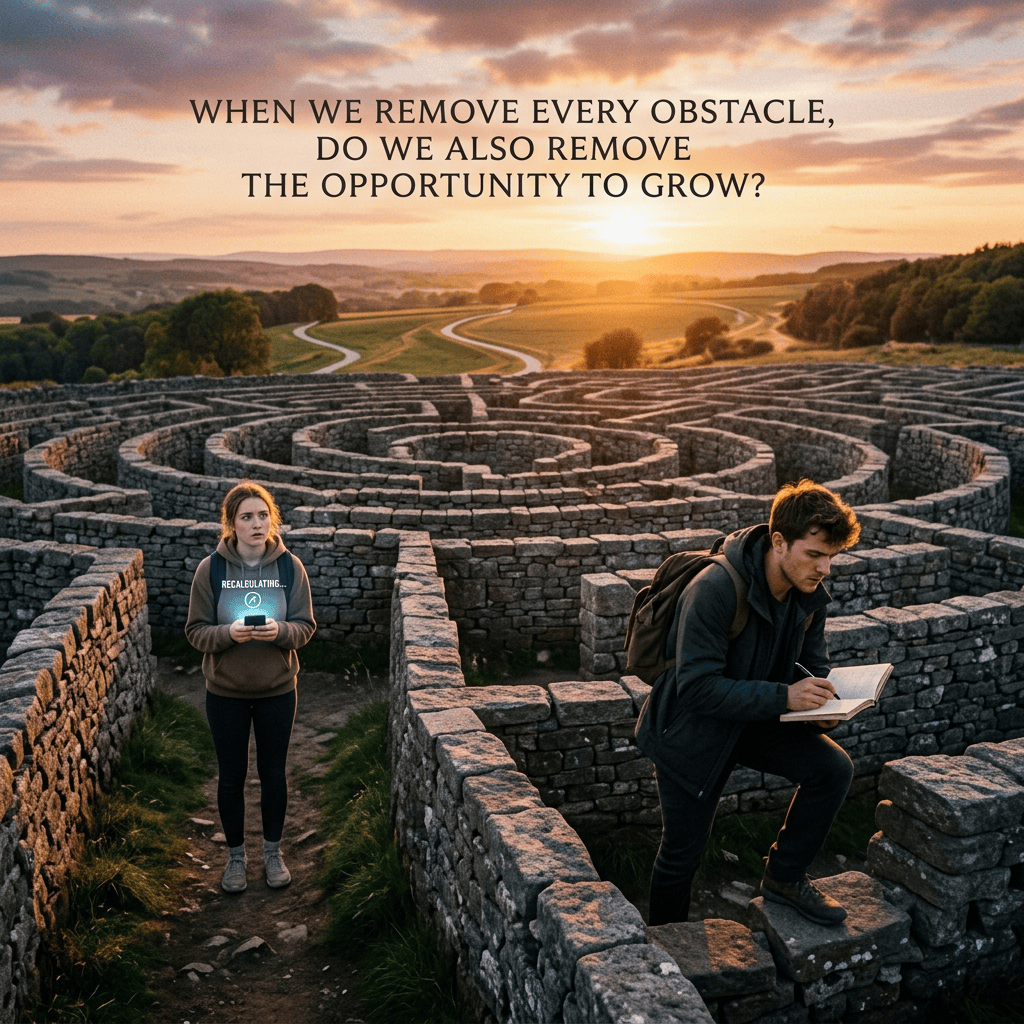
Because somewhere during all of our advancement, we began treating friction like the enemy.
Don’t navigate; GPS will guide you.
Don’t remember it; your phone will.
Don’t struggle through the game; buy the upgrade.
Don’t sit with boredom; here’s another video.
Don’t wrestle with the question; here’s the answer.
Technology became remarkably good at removing obstacles. Businesses also learned there is tremendous money in convenience, attention and dependence. And somewhere in that transition, I believe we stopped asking whether some of the obstacles we were eliminating were actually helping young minds develop.
Critical thinking requires something to think through.
Patience requires waiting.
Frustration tolerance requires frustration.
Confidence requires overcoming something you once couldn’t do.
And independent thinking requires occasionally being left alone long enough to figure something out without somebody; or something; immediately telling you the answer.
That doesn’t make Gen Z stupid. Far from it. Young people today have access to knowledge and technology we couldn’t have imagined while blowing into Nintendo cartridges like we were performing CPR. They can learn coding, music production, languages, engineering or mathematics from a device in their pocket.
The concern isn’t technology.
It’s what happens when the technology starts doing too much of the thinking.
The dramatic increase in ADHD diagnosis over recent decades naturally belongs somewhere in this conversation, but not as a lazy claim that phones or modern video games “caused ADHD.” Science doesn’t support something that simple. Genetics, improved diagnosis, sleep, environment, physical activity and numerous other factors matter. But with children’s attention now competing against notifications, endless scrolling, instant entertainment and systems specifically designed to keep them engaged, we’d be foolish not to study what this environment is doing to developing minds.
Because maybe 90s kids weren’t born thinking differently.
We were trained to think differently.
We repeatedly encountered a world that said: remember it, figure it out, ask somebody, try again.
And perhaps the greatest irony of technological progress is that we became intelligent enough to build machines capable of eliminating thousands of life’s little problems; without considering that solving those little problems may have helped make us intelligent enough to build the machines in the first place.
Three lives. No glowing line. No participation trophy. No purchase required to become better.
You failed.
You learned.
You adjusted.
And eventually, you earned your way to the next level.
Maybe instead of asking how we can make childhood easier, we should start asking a much more important question:
What should we never make too easy?
It’s appreciated if you add a like, subscribe, add a comment, and share this post with others. Then join the conversation, don’t be afraid. There’s plenty more where this came from, so keep scrolling and check out some previous conversations


Don’t forget to be part of the conversation and it’s free to add a like!