By Patrick Hardeman – In and Out of Darkness
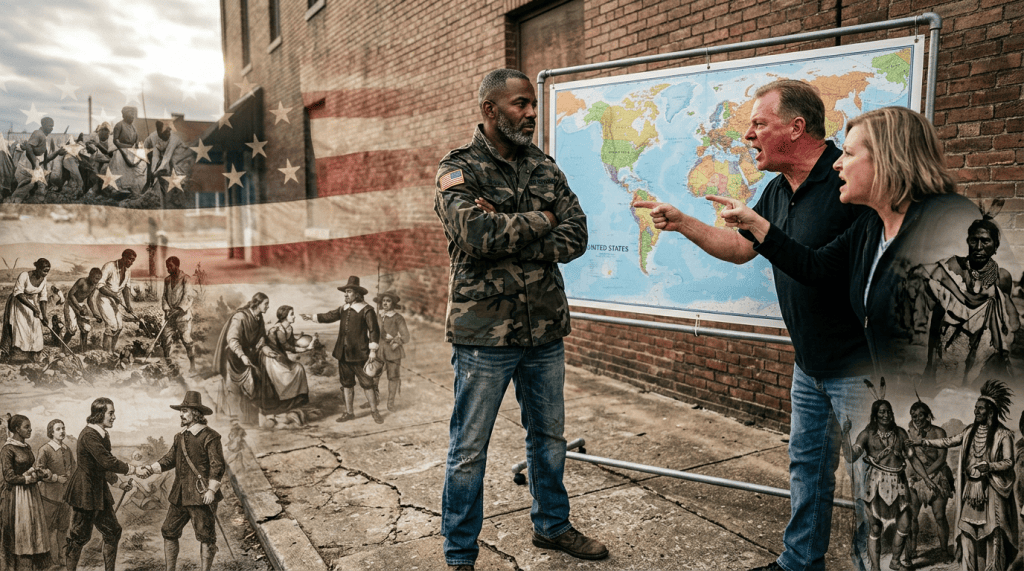
There is something fascinating about people who believe patriotism means keeping your mouth shut while your country behaves badly. Apparently, loving America requires praising its accomplishments, ignoring its failures, and pretending its institutions are above criticism. And heaven forbid a Black American has the audacity to exercise the very freedoms this country claims to celebrate.
Well, here’s a little problem with that philosophy: I didn’t serve this country throughout my military career, advocate for humanity, and spend my adult life contributing to society just to request permission from someone else to have an opinion. My rights aren’t a participation trophy handed out by people who approve of my perspectives. They’re rights. And even if I had never worn a military uniform, I would still possess them.
Being a responsible citizen means holding your country accountable, not applauding every decision it makes. Being a sentient human being means recognizing injustice, questioning authority, and refusing to confuse loyalty with obedience. Yet somehow, some of the loudest people demanding unquestioning patriotism seem to have contributed little beyond their own self-interests. Nevertheless, they speak with the confidence of someone who personally drafted the Constitution between mowing the lawn and complaining about their neighbors. And when they can’t intelligently challenge your argument, out comes that tired little phrase: “If you don’t like it here, go back to Africa!”
Africa? Is That Supposed to Be an Insult?
First of all, have you seen Africa? We’re talking about an extraordinary continent filled with breathtaking landscapes, remarkable civilizations, diverse cultures, magnificent wildlife, and some of humanity’s richest histories. You’re threatening me with that?
If you’re genuinely trying to frighten someone, perhaps something like, “Go to Idaho, Indiana, Arkansas, West Virginia, or Mississippi!” might sound a little colder. No disrespect to the wonderful people living in those states, but let’s acknowledge that not everyone dreams of trading African coastlines for another afternoon of staring at a cornfield or chemical plant, or leagues of homelessness and drug abuse.
And before someone starts typing furiously, yes, I know those states have beautiful places, too. That’s precisely the point. Geography isn’t the insult. The ignorance behind the statement is. Africa isn’t a punishment. It’s the birthplace of humanity. Modern human origins trace back to Africa, which makes the whole conversation about who belongs where considerably more interesting. In fact, if we’re going to start distributing return tickets based on ancestry, perhaps everyone should have a seat.
You First. Let’s See How This Works.
Here’s where the hypocrisy becomes particularly entertaining. You want to tell Black Americans to return to their ancestral homeland because you don’t appreciate their opinions, achievements, confidence, or what I proudly call Back Excellence? Wonderful. Let’s apply your philosophy equally.
Where did your ancestors come from? England? Germany? Ireland? France? Poland? Ukraine? India? Somewhere else? Pack accordingly. But suddenly, I suspect we’ll hear an entirely different argument about generations of family history, citizenship, cultural identity, and why people shouldn’t be judged by where their ancestors originated. Interesting how quickly constitutional principles become important when you’re the person being inconvenienced.
And let’s address another inconvenient historical reality. Many Black Americans didn’t have ancestors who voluntarily boarded ships seeking better opportunities. Our ancestors were abducted, enslaved, transported across an ocean, and forced to build wealth, beaten for fun, forced to be sex tools, for people who denied their humanity. So when someone tells a descendant of enslaved Africans to “go back,” they’re revealing an extraordinary ignorance of how that person’s family arrived here. One of us didn’t escape our homeland hoping for a better life. Many of our ancestors were violently stolen from theirs. That’s not a minor historical detail. That’s an enormous difference.
Whose Country Was It Anyway?
Before European colonizers began claiming ownership of the Americas, Indigenous peoples had already established civilizations, communities, languages, trade networks, and relationships with these lands over thousands of years. Then came conquest, displacement, broken treaties, stolen territory, and policies designed to suppress Indigenous cultures and languages. All under the cloak of an immoral religion, Christianity.
Imagine arriving somewhere, taking what belongs to others, imposing your language and customs, and eventually having descendants who tell other people they don’t belong. The arrogance would almost be impressive if its consequences weren’t so devastating. But hey, you were eventually handed a Bible to show you how to be the very best slave possible.
And yes, Africa’s place in human history matters. Our species emerged there, and human migration eventually populated the globe. But that shared human ancestry doesn’t erase the distinct histories or identities of Indigenous Americans. What it does expose is the absurdity of treating human migration as something shameful only when certain people are involved. Apparently, migration becomes a glorious family heritage when discussing European ancestors, but an invasion when discussing someone whose complexion makes you uncomfortable. Funny how that works.
The Most Dangerous Place for a Black Person
I’ve said it before, and I’ll say it again: The most dangerous place for a Black person is in the fragile white person’s imagination. Because in that imagination, Black confidence becomes arrogance. Black intelligence becomes a threat. Black independence becomes defiance. Black success becomes something suspicious that must be explained, diminished, or challenged. And Black criticism of America? Well, that somehow becomes evidence that we don’t deserve to live here.
Think about how ridiculous that is. A person can spend years serving their country, supporting communities, advocating for human rights, and contributing to society. Yet someone who knows absolutely nothing about their sacrifices can decide, within seconds, that their skin color makes them less American. That’s not patriotism. That’s racial entitlement dressed in a flag.
And no, this isn’t an indictment of every white person. It’s a direct criticism of people who use whiteness as an imagined certificate of ownership, superiority, or authority over others. There’s a difference between loving your heritage and believing someone else’s existence threatens it. If another person’s excellence makes you feel inferior, the problem isn’t their excellence.
Accountability Is Not Hatred
Criticizing America doesn’t mean I hate America. It means I recognize the difference between what this country promises and what it actually delivers. I can respect the sacrifices made by people who served while condemning decisions made by the government. I can appreciate opportunities while demanding accountability for systemic failures. I can acknowledge progress without pretending injustice disappeared simply because some people are tired of hearing about it.
And I don’t need anyone to explain patriotism to me as though it’s measured by how enthusiastically someone waves a flag. I’ve earned my perspective through service, experience, observation, and a commitment to humanity. But the right to speak belongs equally to people who haven’t served. That’s what freedom means. A country that claims to value liberty should never require silence as proof of loyalty.
If you disagree with my position, challenge my reasoning. Bring. evidence. Bring historical understanding. Bring something more substantial than recycled insults and inherited prejudices. But don’t confuse your discomfort with my obligation to disappear.
So, Who’s Going Back?
Perhaps the next time someone feels compelled to tell another American to return to their ancestral homeland, they should consider whether they’re prepared to follow their own advice. Because if we’re all going back to where our ancestors originated, the airports are going to be extremely busy, going to cold, and rainy places with minimal seasonings. And if we trace humanity’s ancestry far enough, Africa might have a considerably larger family reunion than anyone anticipated.
Of course, we could avoid this entire ridiculous exercise by accepting something remarkably simple: No person’s humanity, citizenship, or freedom of expression should depend on another person’s racial comfort.
I don’t need to leave my country because my opinions challenge your imagination. And you don’t need to leave because your ancestors arrived running away from somewhere else. What we both need is the maturity to recognize that belonging isn’t something we get to grant or revoke based on personal prejudice.
So, the next time you’re tempted to tell someone to go back where they came from, perhaps start by taking a little trip yourself. Not necessarily across an ocean. Just back to a history book. (Preferably not written by criminals of humanity.) You might discover that the world was never exclusively yours to begin with.

It’s appreciated if you add a like, subscribe, add a comment, and share this post with others. Then join the conversation, don’t be afraid. There’s plenty more where this came from, so keep scrolling and check out some previous conversations


Don’t forget to be part of the conversation and it’s free to add a like!